

If you’ve spent any time exploring Rome’s classical sites, you may think that you’ve seen everything there is to be seen in the Eternal City. But think again. For starters, look down. We’ve discovered another side of Rome, a hidden Rome that is brimming with antiquity.
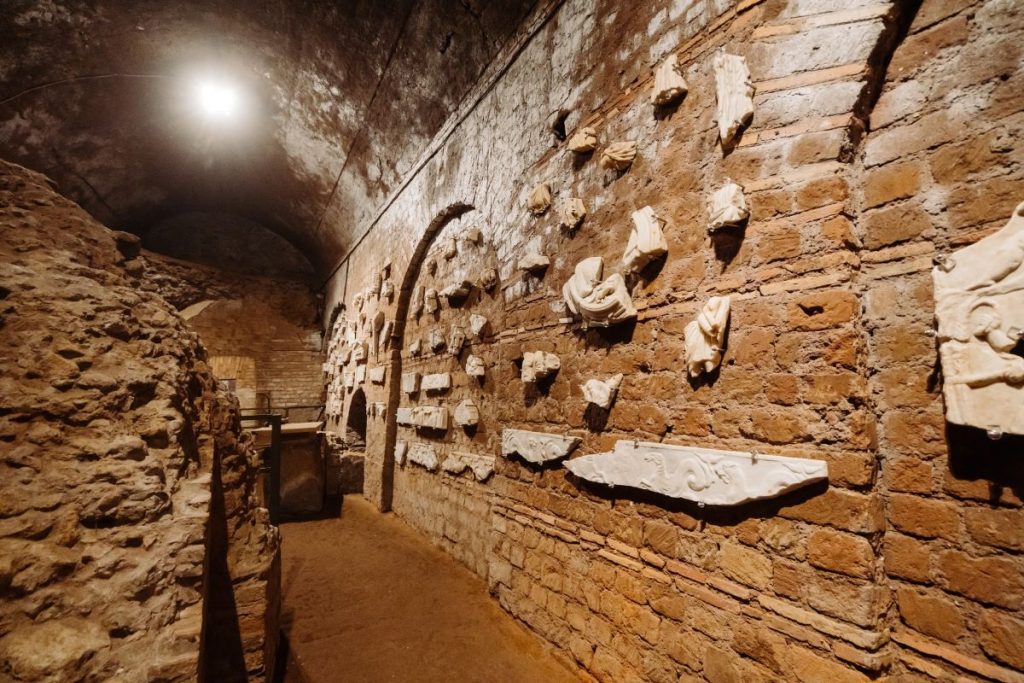
The thing is, you have to know where to look. Of course, the best way to go about that is to join a guided walking tour of Rome’s catacombs. This will lead you and a small-group of other travelers into the depths of hidden Rome. An underground world where you’ll explore the city’s most fascinating chambers and passages, time traveling into the past with each step.
Hidden Rome:
What You’ll See on a Tour of Rome’s Ancient Hidden Sites
Escape the bustling ancient metropolis and enjoy the more tranquil side of what we love to call hidden Rome. The Appian Way is the most bucolic slice of the Eternal City. You will see umbrella pine trees and two-thousand-year-old stone funerary monuments that dot the landscape.
Get an up close and personal look at the Mausoleum of Cecilia Metella. Hear the fascinating stories behind this monument, and the incredible and beautifully preserved aqueducts. You’ll also get to descend into a catacomb, home to the early Christian martyrs and the people who venerated them. The fascinating details below are just a small taste of what you’ll learn on a guided tour.
Traveler’s tip: Want to see Rome, but limited on time? We’ve got you covered with our tips on how to spend 24 hours in Rome.
The Queen of Roads
The Roman road system was one of the marvels of the ancient world. And the Appian Way – or, as the locals call it, the Appia Antica – was once a super highway. It stretched from the capital all the way to the “heel” of the boot (to the town of Brindisi). The section of road, known as “The Queen of Roads,” which is just outside of Rome, is now a 6,000 acre public park and one of the best off-of-the-radar sites of the Eternal City.
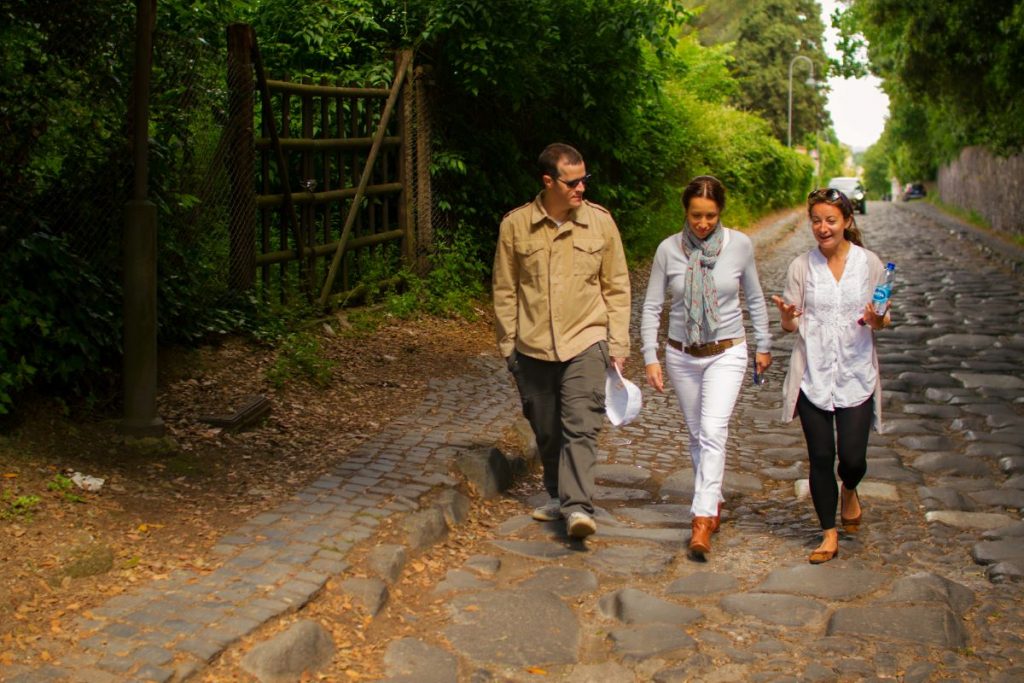
The road begins at the third-century A.D. Aurelian Walls and the Gate of San Sebastian and meets the Christian catacombs. A bucolic treat is in store for those who keep wandering. The brick-sized cobblestones give way to large irregularly shaped stones, complete with ruts made from centuries of chariots travelling the road.
Crumbling millennia-old mausoleums and shady umbrella pines flank the road, which is completely traffic free on Sundays. Remnants of mosaic-floored villas and stadiums line the road and make for a perfect excuse for a breather. And your guide will tell tales of what life was like on the Appian Way 2000 years ago.
Interesting fact: The Appian Way is one of the most fashionable places in Rome to live these days. The villas situated just off the ancient road are now the homes of celebrities, including designers Valentino and Armani.
Mausoleum of Cecilia Metella
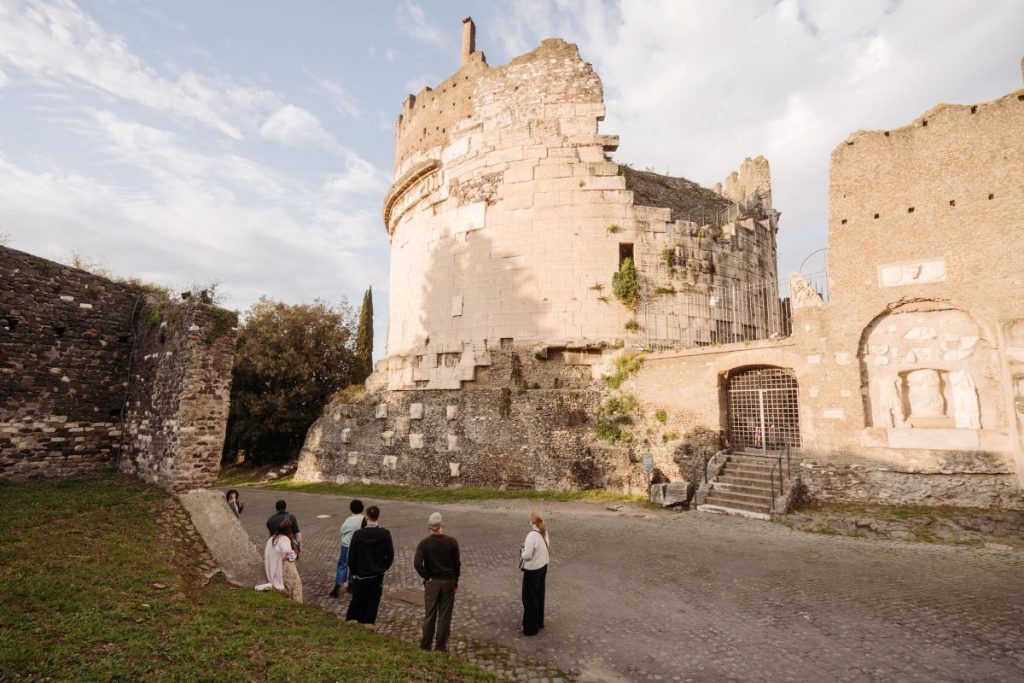
This three-floor cylindrical lava rock structure is the tomb of Cecilia Metella. She was a first-century BCE aristocrat, and the wife of Marcus Licinius Crassus – who served under Julius Caesar. The tomb dates back to sometime between 30 and 10 BCE
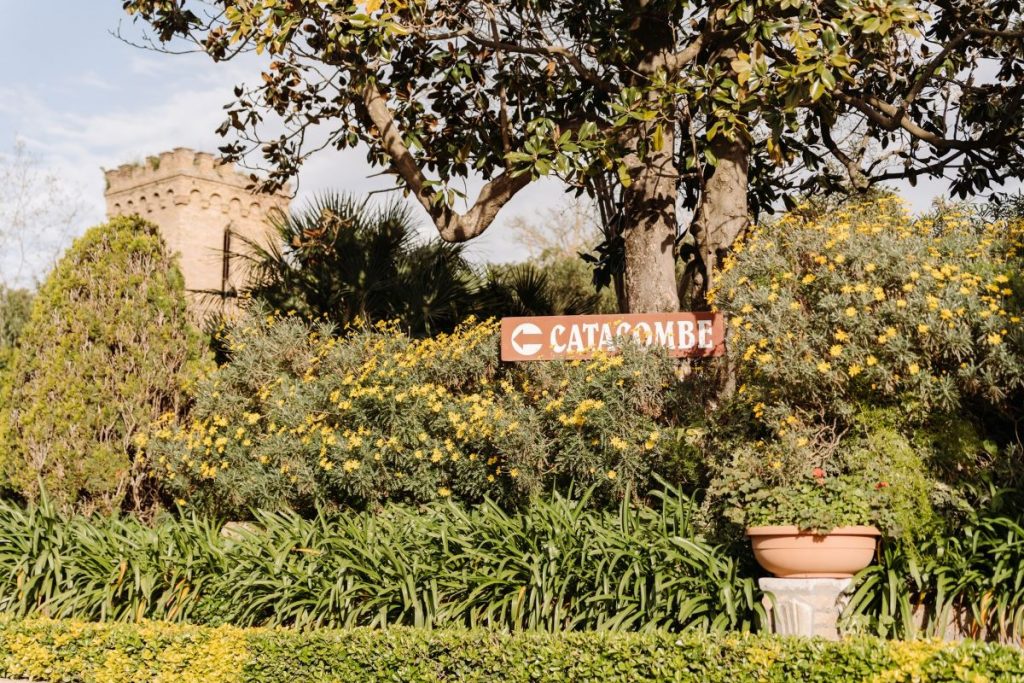
It looks very different today. This is because, in the early 14th century, another aristocratic family, the Caetani, transformed the tomb. They bought the land around the structure and then turned it into a larger fortress. This included horse stables, warehouses, living quarters, and a church.
Today it is the location of the Museum of the Appian Way. It displays millennia-old statues, relief sculptures, and funerary monuments that once lined the Appian Way.
Catacombs of St. Sebastian
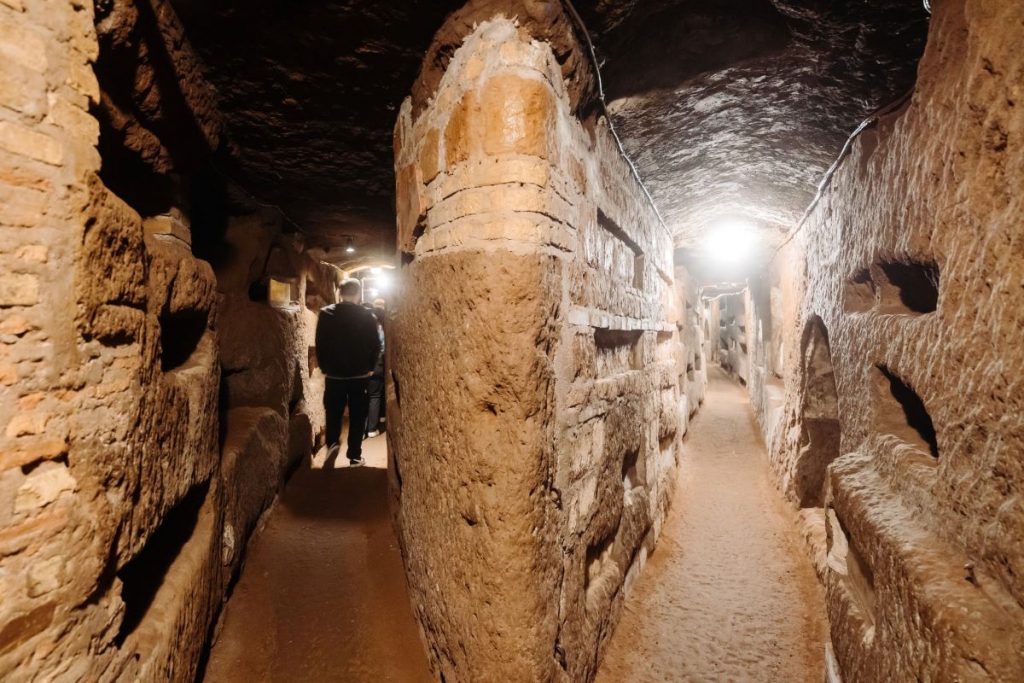
Most of the famed catacombs where early Christians worshipped in secret are located near the Appian Way. The reason is because this is where they buried the dead. Cemeteries always had to be located outside the city. And no one was enforcing the followers of this new cult to obey by the pagan religion.
The word “catacombs” could potentially be from Latin for “cata tumbas,” meaning “among the tombs.” Or perhaps the Greek words, “kata” and “kymbe,” which, when combined, means “close to the cavity.”
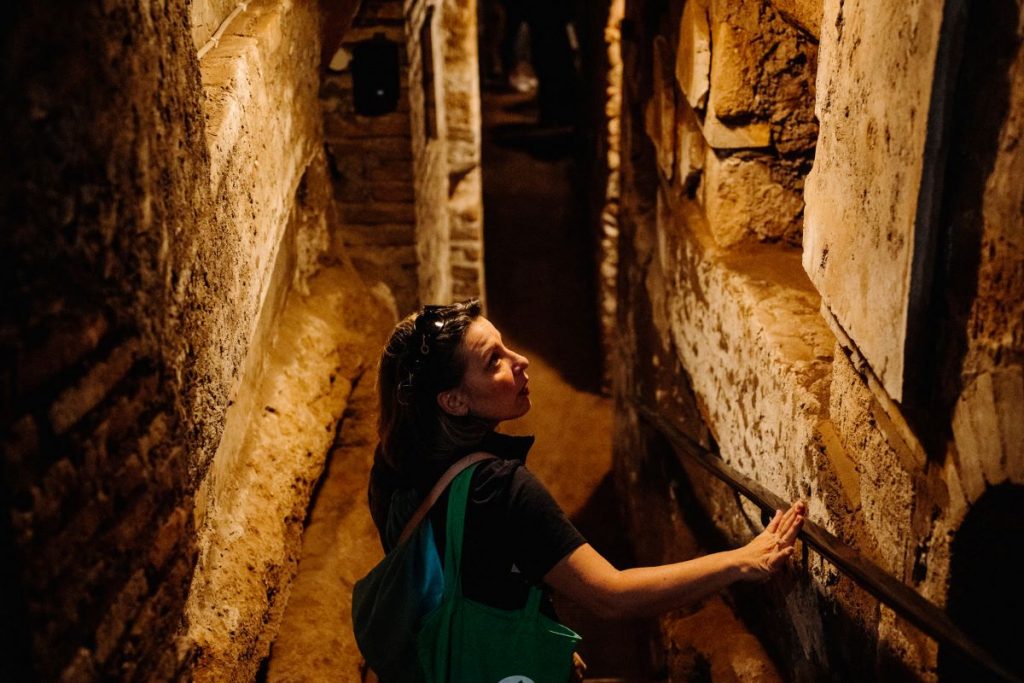
One of the largest catacombs here is that of San Sebastian. You can descend underground and walk along the ancient subterranean passageways and see where the devout would clandestinely worship.
Many of the bones of the people entombed here are long gone – thanks to the medieval relics craze! Relic salesmen would often raid the tombs, hoping to fetch a bone of an early sanctified martyr to sell on the relics market. These are just a couple of the great anecdotes about these unique sites that you can learn by taking an expertly led tour of Rome’s Catacombs.
Parco degli Acquedotti
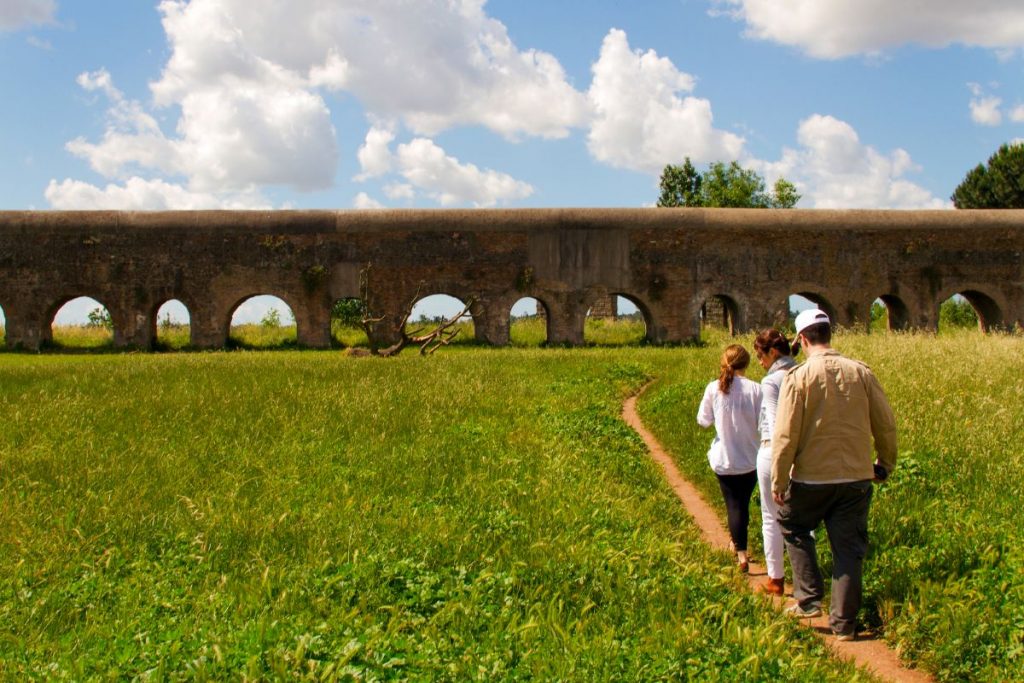
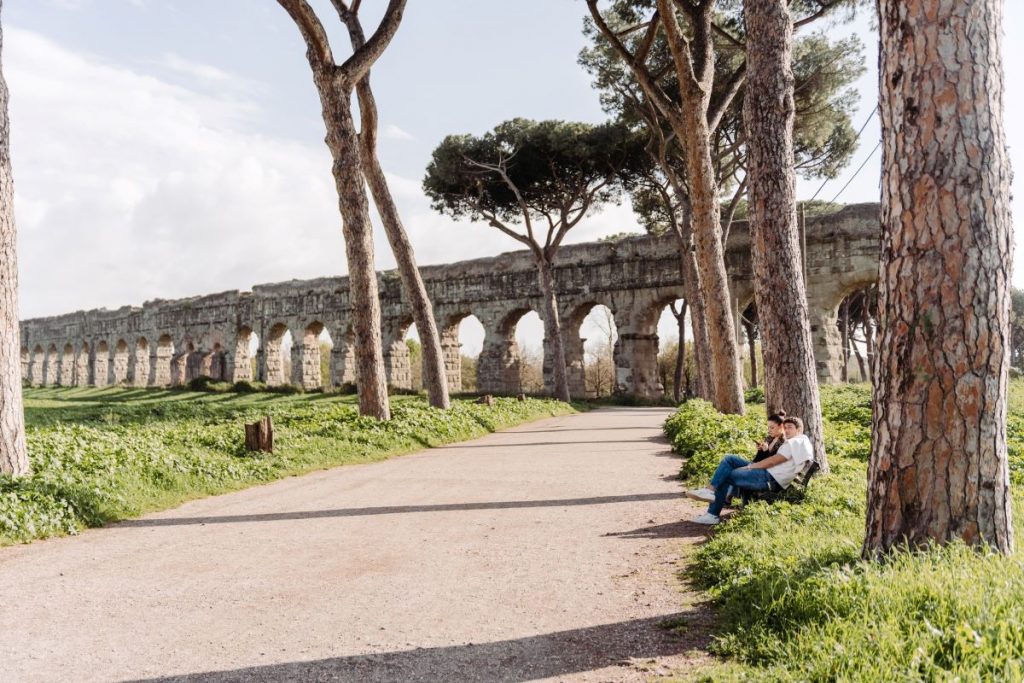
Hidden Rome is not just underground! Many people are not aware that this swath of the Roman countryside, not far from the Appian Way, is also home to many ancient Roman aqueducts. These impressive antique structures sit relatively intact like ghostly reminders of how advanced Roman society actually was.
The two aqueducts, the Acque Claudia and the Anio Novus – date from the first half of the first century A.D. and carried water into the center of Rome and the hills around Tivoli. In fact, they carried over a third of the water supply of Imperial Rome, over 250 gallons of water per person, per day. Today the park makes for a quiet stroll and an up-close look at an ancient engineering marvel.
FAQs – Hidden Rome
1. Why were the catacombs located outside the city of Rome?
In ancient Rome, burial within the city walls was prohibited for sanitary and religious reasons. This led to the creation of vast underground cemeteries, or catacombs, just outside the city, especially along major roads like the Appian Way.
2. What was the purpose of Roman aqueducts?
Roman aqueducts were built to transport fresh water from distant sources into cities and towns using a precise system of gravity-fed channels. Structures like the Acqua Claudia and Anio Novus brought millions of gallons of water daily to supply baths, fountains, households, and public latrines.
3. Who was Cecilia Metella, and why is her mausoleum significant?
Cecilia Metella was a noblewoman from a powerful Roman family in the 1st century BCE. Her tomb on the Appian Way became a symbol of elite Roman architecture and status. Later, it became a medieval fortress, reflecting centuries of Roman and post-Roman history in one iconic structure.
Ready to uncover hidden Rome’s best-kept secrets? Well, step off the beaten path and journey through ancient aqueducts, catacombs, and the legendary Appian Way. Don’t just visit Rome—experience it. Reserve your spot on a small-group guided tour of Rome’s catacombs and walk through 2,000 years of Rome’s hidden history.