

It’s only a slight exaggeration to say that you could trip and fall in almost any direction in Florence and end up staring at a Medici landmark. Indeed the Medici family in Florence have been so instrumental in the city’s transformation that it makes it difficult to imagine what a pre-Medici Florence looked like. You simply cannot overstate their importance to Florentine, Tuscan, and even Italian history.
Whether you plan a Florence walking tour to discover Renaissance art, explore the city’s museums, or seek out Medici history firsthand, you will quickly realize that Florence stands as a living testament to this legendary family’s enduring legacy. So, here’s a brief overview of the historic highlights of the Medici family. And a few of the many important Medici-related attractions in Florence.
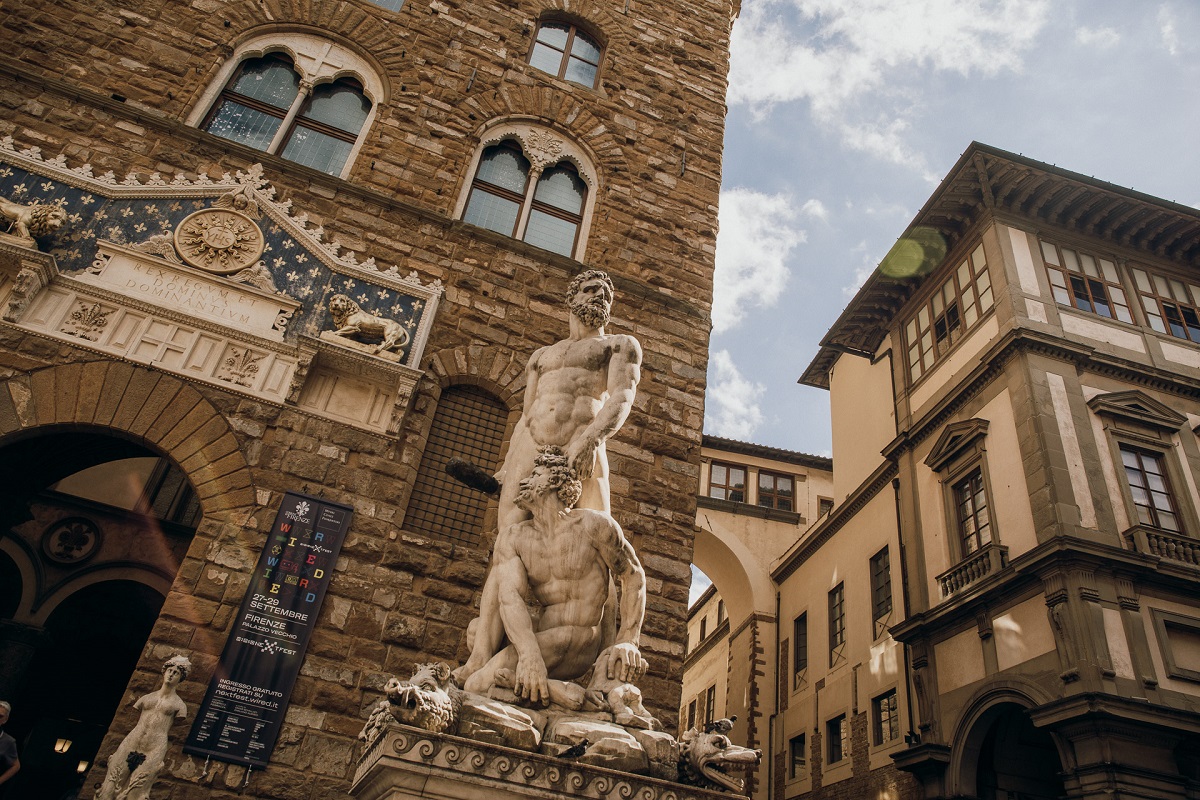
Signs and symbols of the Medici family appear all over Florence
The Medici Family in Florence
Firstly, let’s clarify a couple of details about the Medici family in Florence.
- You pronounce the surname MEH-dee-chee, with the emphasis on the first syllable.
- The name comes from the Italian word for doctor, “medico,” in its plural form.
In fact, there is some debate about whether the family worked as doctors before they rose to prominence as bankers in the 15th century Regardless, their rise marks a turning point in both Medici history and the history of Florence itself.
Who’s Who: Medici Edition
Giovanni di Bicci de’ Medici
Giovanni di Bicci de’ Medici founded the Medici Bank in 1397. Soon after, the bank elevated the family to the upper echelons of Florentine society. Giovanni set a precedent his heirs would largely follow. Instead of setting himself apart from the rest of Florence as royalty, which he could have easily done with his growing wealth, he blended in. He declined government positions and dressed his family in everyday clothing. Yet he continued to build wealth and stability for the family behind the scenes.
Cosimo de’ Medici
Giovanni’s son, Cosimo, took over running the bank from his father in 1420. He set another precedent for which people will forever know the family: he began using a substantial portion of the family wealth to patronize the arts. For instance, Cosimo paid for Donatello’s David, a bronze free-standing sculpture now on display in the Bargello Museum. During Cosimo’s reign, the Medici became the Vatican’s bankers, further cementing their wealth and status.
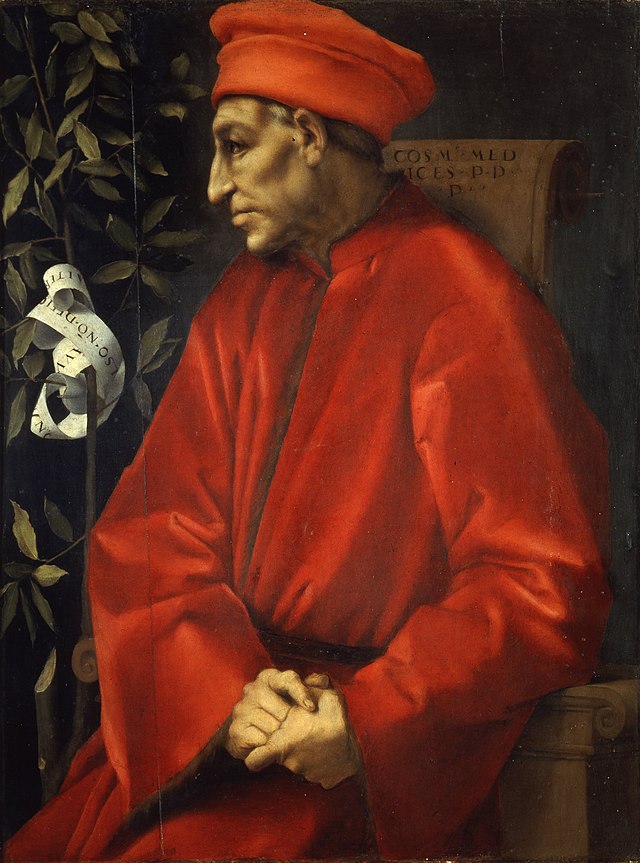
Cosimo helped establish the Medicis as patrons and was perhaps the most influential Medici.
Lorenzo de’ Medici
Cosimo’s grandson, Lorenzo, assumed the position at the head of the bank in 1469. People frequently refer to Lorenzo by his nickname, “Il Magnifico,” or “The Magnificent,” a moniker he apparently gave himself. Lorenzo stands as perhaps the best-known Medici among tourists. This is because he’s the one we have to thank for so much artwork by Michelangelo, da Vinci, and Botticelli. However, he didn’t possess the business savvy his predecessors did. His oldest son, Piero, took over after Lorenzo died in 1492. However, 2 years later, Piero went into exile in 1494 and the bank quickly collapsed.
Medici Popes: Leo X, Clement VII, Pius IV, and Leo XI
The Medici returned to prominent status in Florence in 1512 when Cosimo I became the first Grand Duke of Tuscany in 1569 by papal decree. During the 16th and early 17th centuries, the family also rose to power inside the Vatican. Indeed, four became popes (Leo X, Clement VII, Pius IV, and Leo XI), as well as French royalty (two became queens).
Anna Maria Luisa de’ Medici
The glittering dynasty ended in the 18th century when the last Medici, Anna Maria Luisa de’ Medici, died in 1743. Upon her death, she bequeathed the vast majority of the family’s art, palaces, and other belongings to the Tuscan state, with the provision that nothing would ever leave Florence.
The Medici Legacy in Florence
So, from the ambitious founding of a bank to Anna Maria Luisa’s death 346 years later, the Medici family left countless indelible marks on Florence. You can visit the family’s former homes and offices. You can go to the church where many Medici are buried. There are examples throughout the city of Medici-funded artwork, particularly due to the significant role Lorenzo’s art patronage played in the Italian Renaissance.

Signs and symbols of the Medici family appear all over Florence.
Where to Visit: Medici Attractions
If you want to understand the cultural importance of the most famous family in Florentine history, start with these Medici attractions in Florence. As you map out your own Florence walking tour to uncover Medici history, make sure you include these essential sites:
- Palazzo Medici-Riccardi: The family’s first palatial home and a masterpiece of Renaissance architecture.
- Palazzo Vecchio: Their former seat of government and an icon of Florentine civic life.
- Palazzo Pitti & Boboli Gardens: The Medici’s later residence, featuring spectacular gardens and museums.
- Uffizi Gallery: Originally their business offices, now home to one of the world’s most important art collections.
- Medici Chapels: The grand mausoleums where generations of Medicis rest.
Traveler’s tip: Medici isn’t the only influential figure in this idyllic Italian town. If you want to find out more about Michelangelo’s David, check out our VIP Florence Duomo Tour. You will receive special early access to the halls of the Accademia Gallery – to see David. Plus, a skip-the-line ticket to the rooftop terraces of Santa Maria del Fiore.
Palazzo Medici-Riccardi
Cosimo built the first palatial Medici home in the mid-1400s. The three-story structure features increasingly refined stonework on each higher floor. Michelangelo lived in this palace as a young man.
It is now called the Palazzo Medici-Riccardi for the family that bought it from the Medici in 1659. The palace houses both Florence’s city government offices and a museum, which includes the Medici family’s private gardens and chapel. Most Florence walking tours highlight this location, making it a must for anyone interested in Medici history.
The Palazzo Medici-Riccardi was one of the first palaces commissioned for the Medicis. Photo Credit: Manuela Musco
Palazzo Vecchio (formerly Palazzo della Signoria)
This originally began its life in the late 13th century as the Palazzo della Signoria. It served as a town hall until Cosimo I decided to move in in 1540. It was Cosimo I who gave it its current name, Palazzo Vecchio, which means “Old Palace,” when he moved out less than a decade later.
Today, although it once again serves as town hall, the palace also operates as a museum with several sections. Notably, the Salone dei Cinquecento, or Hall of the 500, displays enormous frescoes and a beautiful paneled ceiling. Art by Michelangelo and Donatello fills the space—but the statue of David at the front door is a replica. The Palazzo Vecchio is an iconic stop on any Florence walking tour focused on Medici history and Renaissance art.
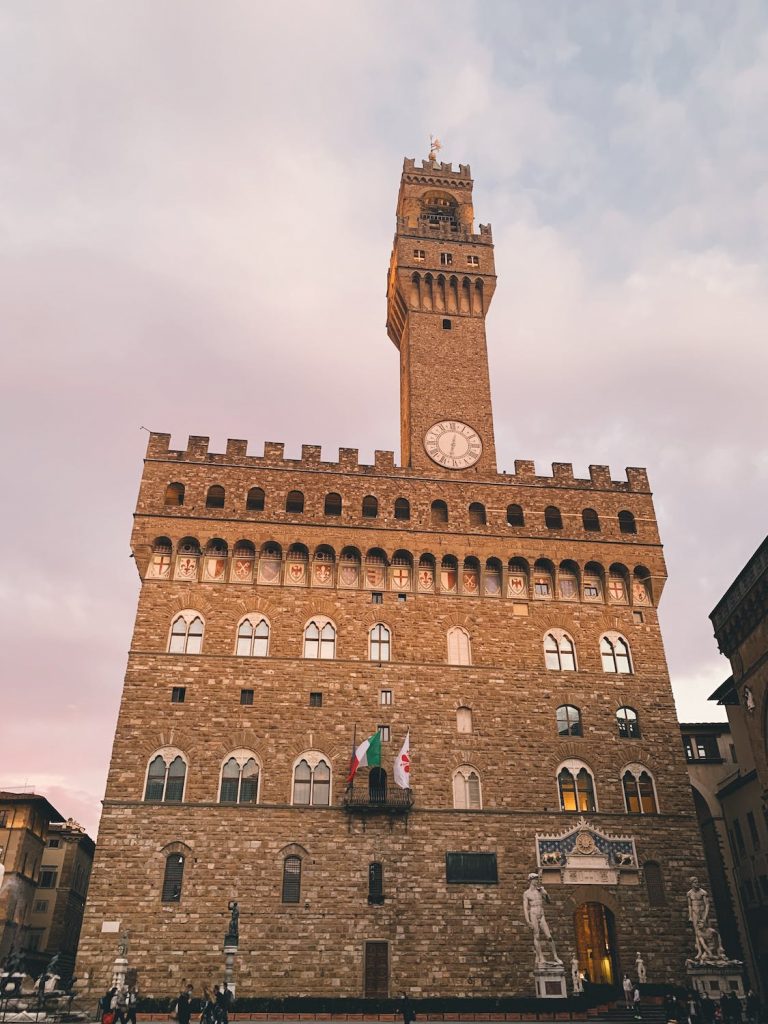
Former Medici home Palazzo Vecchio is used administratively but still has a museum for visitors. Photo Credit: Marco Carlotti
Palazzo Pitti & Boboli Gardens
When Cosimo I moved out of the Palazzo della Signoria, he chose fancier digs across the river in the Palazzo Pitti. Built in the mid-15th century for another Florentine banker named Pitti, the palace became the Medici home in 1549. The palace also housed two ruling families after the Medici. Today, the Pitti contains five different museums, including the Palatine Gallery. This is where part of the Medici family’s incredible collection of artwork is on display.
The Medici also acquired land behind the palace, and Cosimo I’s wife, Eleonora, transformed it into the spectacular Boboli Gardens. Covering roughly 11 acres, the gardens represent the biggest green space in the city. Their design inspired palace gardens throughout Europe. You will find grottoes, fountains, statues, and even an Ancient Egyptian obelisk.
Palazzo Pitti ranks among the most popular Florence museums. The combined history, art, and peaceful gardens make it a highlight of any tour. If you plan to visit, secure your tickets in advance, especially during the busy season.
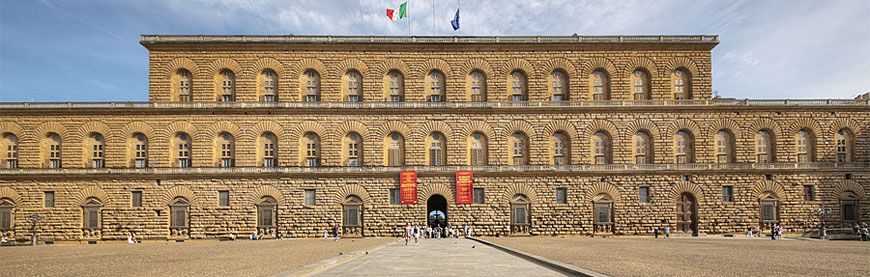
Behind this palace in Florence, you can explore the sprawling Boboli Gardens that Eleonora de’ Medici had commissioned. Photo Credit: Hidden Italy
Uffizi Gallery
While most visitors to Florence have heard of the city’s most famous art museum, not everyone knows that the Medici family once did business in the building itself. The Uffizi Gallery takes its name from the Italian word for “offices”, uffizi.
Cosimo I commissioned the construction of the Uffizi. This was so that the family could house their business enterprises next door to the former Medici palace, the Palazzo della Signoria (now the Palazzo Vecchio). After the last of the Medici family died, the enormous structure, already filled with artwork, absorbed even more of the family’s extensive art collection. In 1765, officials opened it to the public as a museum.
Today, the Uffizi art collection stands among the most remarkable in the world, especially for Italian Renaissance art. Notable masterpieces at the Uffizi include:
- Michelangelo’s Doni Tondo
- Leonardo da Vinci’s The Annunciation and Adoration of the Magi
- Raphael’s Madonna of the Goldfinch
- Titian’s Venus of Urbino
- Caravaggio’s Bacchus and Medusa
- Artemisia Gentileschi’s Judith Beheading Holofernes
- Botticelli’s Primavera and The Birth of Venus
Insider´s Tip: If you feel passionate about Renaissance art and Medici history, place the Uffizi at the top of your list! However, long lines often form at the Uffizi, especially during high season. So, if you want to see all the highlights with a knowledgeable guide, sign up for our Florence in a Day Tour.
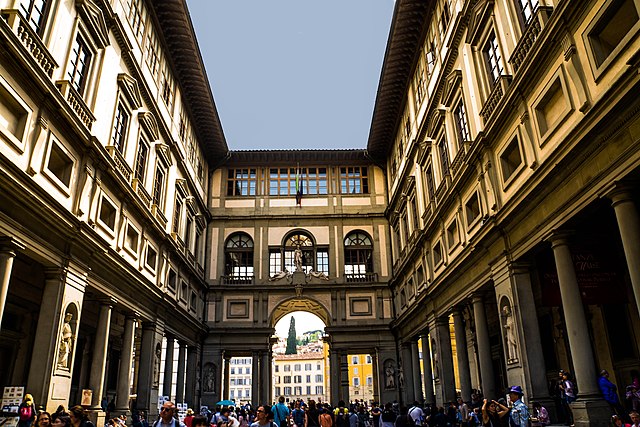
The Uffizi is one of the first modern museums. Photo Credit: Michelle Maria
The Medici Family Chapels
Florence contains dozens of famous tombs, but to see most of the Medici in one place, you need to visit the Basilica di San Lorenzo. The church houses two chapels, called the Medici Chapels, which serve as the final resting places for several family members.
The first, the New Sacristy, contains two enormous sarcophagi (with sculptures by Michelangelo) for two lesser-known Medici, Giuliano di Lorenzo and Lorenzo di Piero. Two more tombs, for Lorenzo “Il Magnifico” and his brother Giuliano, were never built. Their bodies lie, instead, under the altar near the entry. The founder of the Medici dynasty, Giovanni di Bicci de’ Medici, also rests underfoot in the centre of the New Sacristy.
You will find tombs and funerary monuments to Medici Grand Dukes in the Chapel of the Princes, the second Medici Chapel. However, six tombs remain empty (the remains are actually in the basilica’s crypt). This octagonal chapel features colorful slabs of marble and stone, topped by a dome that, from the exterior, resembles the one on the city’s cathedral. Construction started in the early 17th century, but work continued through the mid-19th century.
Additionally, some 50 members of the Medici family lie in the basilica’s crypt. These include Cosimo the Elder, who asked that his friend, Donatello, be buried nearby.
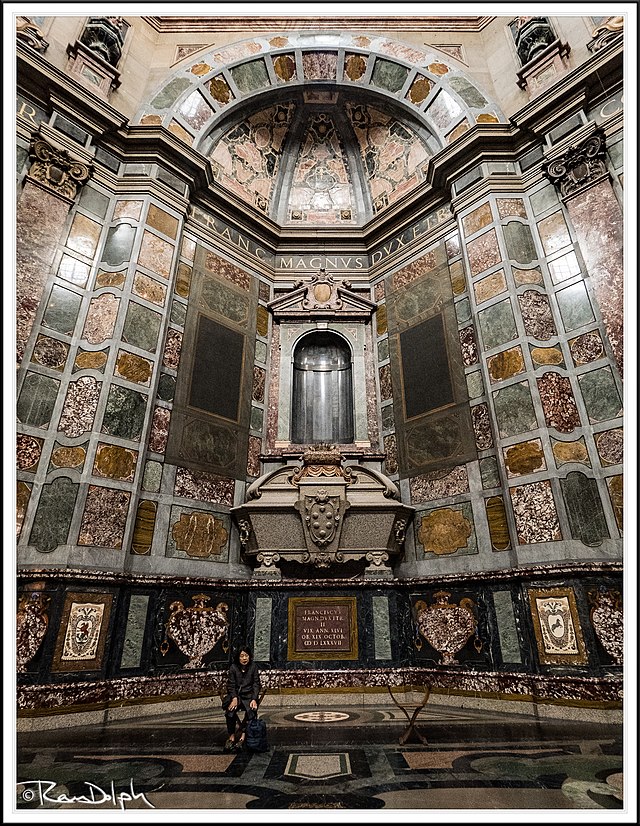
Florence’s Chapel of Princes, one of the Medici Chapels. Photo Credit: Randolph Croft
Other Major Sights with Ties to the Medici
As mentioned, you will find evidence of the Medici family’s influence all over Florence. In no particular order, here are a few other places that wouldn’t attract such attention if not for the Medici. When you build your own Florence walking tour, include these highlights to fully immerse yourself in Medici history and Renaissance art.
Accademia Museum
Michelangelo’s stunning David originally stood at the entrance of the Palazzo Vecchio, a former Medici home. Nevertheless, in 1873, curators moved it to the purpose-built Galleria dell’Accademia to protect it from further damage from the elements. This museum also houses a handful of other Michelangelo sculptures and the original plaster for Giambologna’s Rape of the Sabine Women. The collection also includes a number of other paintings, and several historical musical instruments. Anyone interested in Renaissance art should not miss this Florence museum.
Vasari Corridor
When the Medici family moved to the Palazzo Pitti across the Arno, they still kept their offices in the Uffizi. Walking to work through the busy streets wasn’t ideal, so Cosimo I commissioned Giorgio Vasari to build what people now call the Vasari Corridor, a raised path for the family’s commute. Today, you can visit the corridor only with guided tours, and its walls display unique artwork.
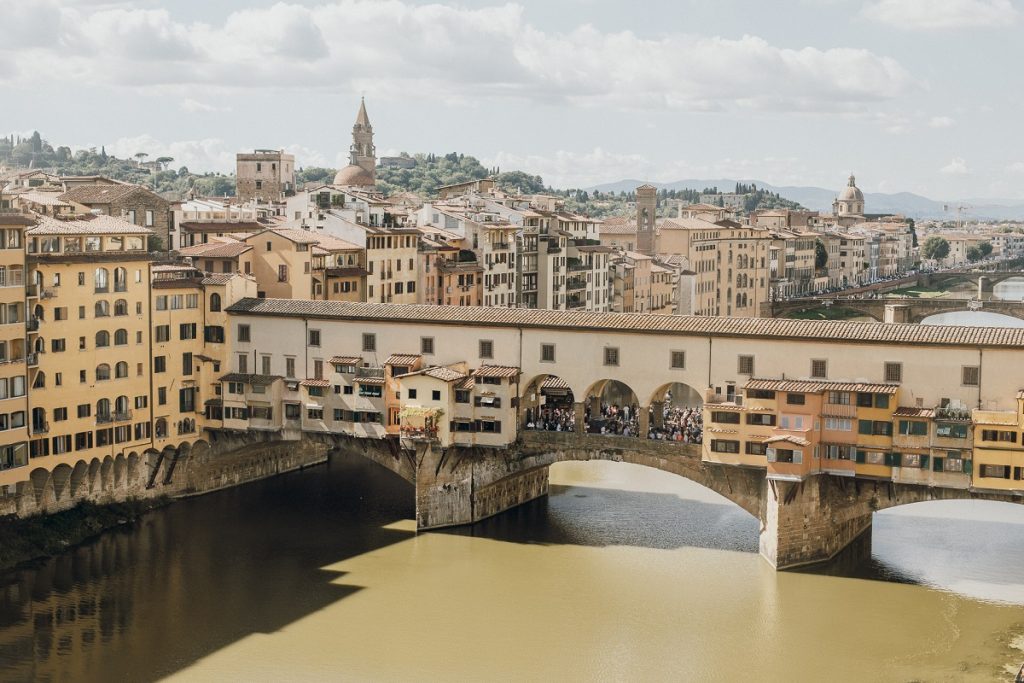
The Vasari Corridor helped the powerful Medici family move discretely from the Uffizi to the Boboli Gardens.
Biblioteca Laurenziana
Also known as the Biblioteca Medicea Laurenziana, this library inside the Basilica di San Lorenzo houses roughly 11,000 ancient and historic manuscripts. The core of these came from the Medici’s private collection. Although it’s not a lending library, visitors flock to see its Michelangelo-designed vestibule and reading room. For lovers of Medici history, this Florence museum brings the past to life.
Bargello Museum
The Bargello is to sculpture what the Uffizi is to paintings. One of its most important pieces is the bronze David that Cosimo commissioned in the mid-1400s. Other sculptures in the museum’s impressive collection include a Bacchus by Michelangelo, a bronze bust of Cosimo I by Cellini, and two contest entries for the commission of the “Gates of Paradise” doors on the Duomo’s Baptistery. The Bargello serves as a treasure trove for fans of both Renaissance art and Medici history.
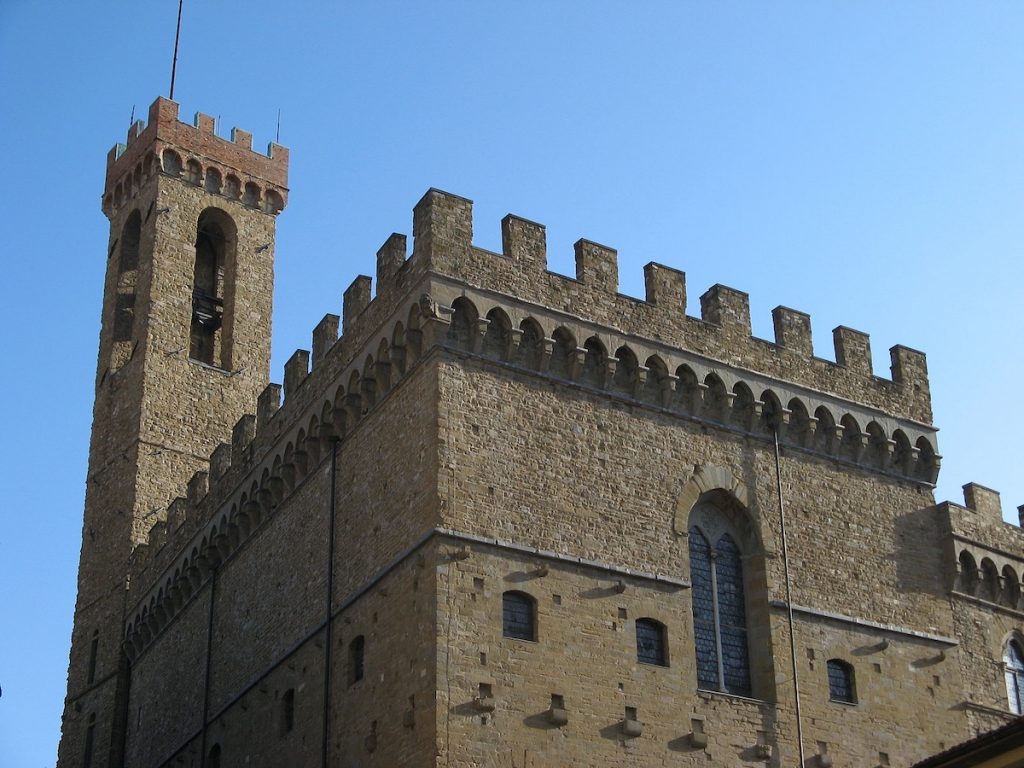
The museum within the Bargello is famous for its extensive collection of sculptures by renowned Renaissance artists such as Donatello, Michelangelo, and Giambologna. Photo credit: Terrasque
FAQ: Medici Landmarks and Visiting Florence
Which museums are best for Renaissance art connected to the Medici?
The Uffizi Gallery and the Bargello Museum top the list for fans of Renaissance art. The Uffizi houses masterpieces by Botticelli, Michelangelo, da Vinci, and many others—much of it collected or commissioned by the Medici. The Bargello is renowned for its sculpture collection, including Donatello’s David.
Are Palazzo Pitti tickets necessary, do i need to book in advance?
Yes, you should purchase Palazzo Pitti tickets in advance, especially during peak travel seasons, as the palace and its museums are some of the most popular attractions in Florence. Booking ahead ensures you won’t miss out on exploring this pivotal Medici residence and the adjacent Boboli Gardens.
How can I learn more about Medici history while in Florence?
Join a guided Florence walking tour that focuses on Medici history and Renaissance art. Knowledgeable guides will bring the stories behind the landmarks and Florence museums to life.
Tip: Ask all of your questions, at your own pace, on an exclusive Private tour with a local guide.
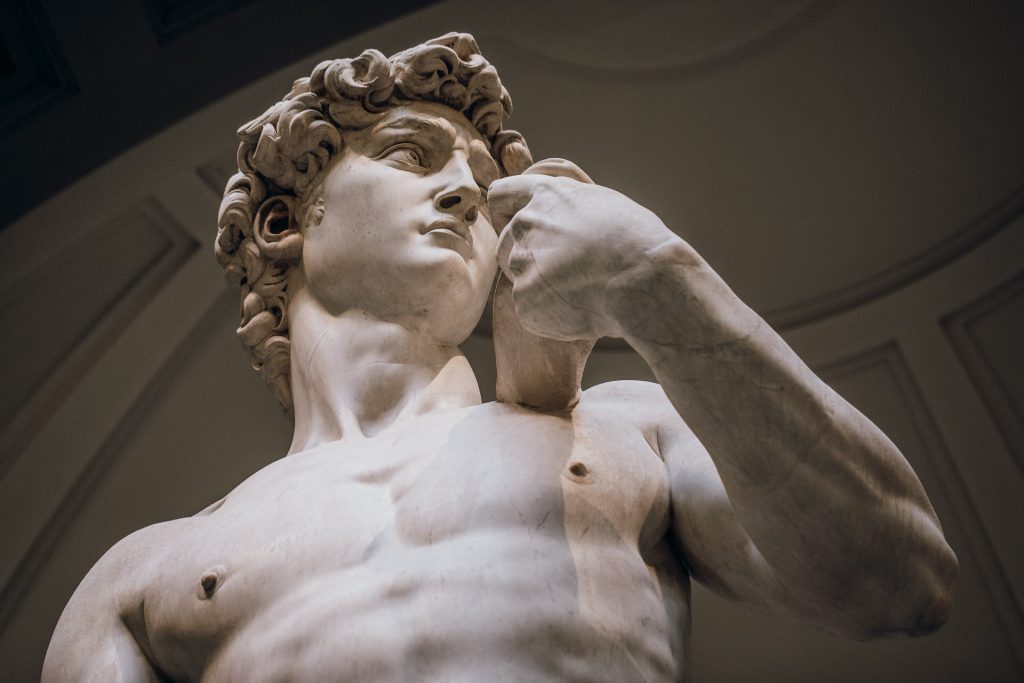
Skip the long lines to climb to the top of the Duomo and slip into the Accademia Gallery before the crowds arrive to see Michelangelo’s David with our VIP Florence Duomo Tour! You’ll not only receive early access to the Accademia and skip the line at Florence’s majestic cathedral but learn many more insights into the influential Medici family.
