

Carnegie Hall is one of the world’s finest venues for music.
Throughout it’s history, the hall has presented exalted artists including Tchaikovsky, Caruso, Toscanini, Mahler, Richard Strauss, Duke Ellington, Leonard Bernstein, Frank Sinatra, Maria Callas, Judy Garland, and Billie Holiday to name a few.
With its elegant design, near-perfect acoustics, and performances by the world’s greatest musical artists, it is an essential destination for lovers of music.
So, lets take a moment to delve into the history of this special place, and discover how you can make a visit to experience the magic in person.
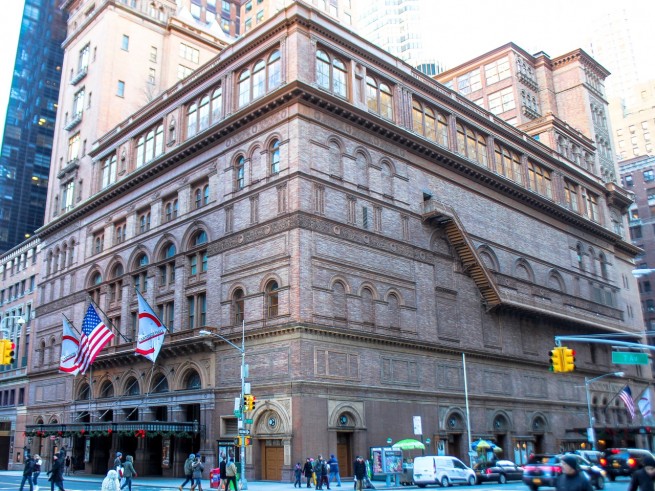
The History of Carnegie Hall
Origins
Wealthy steel magnate Andrew Carnegie built Carnegie Hall as a labor of love – his love of music and his new bride, Louise, who was a member of the Oratorio Society of New York, for which the hall was initially built.
When the cornerstone was laid in 1890 (at an undeveloped intersection just south of Central Park), Carnegie proclaimed, “It is probable that this Hall will intertwine itself with the history of our country.”
Performers and Premieres
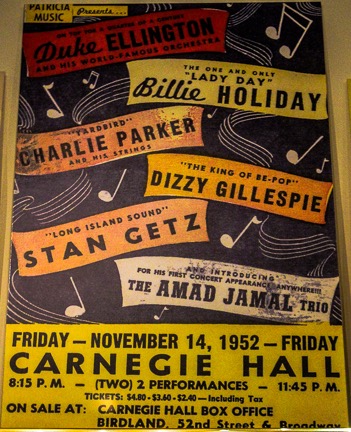
Prophetic words! Since its 1891 opening night (lead by none other than Tchaikovsky), the venue has presented the most renowned classical music ensembles, conductors and soloists of their time. It has also hosted greats of Jazz, Pop and World Music, as well as comedians and famed orators like Mark Twain, Theodore Roosevelt, and Booker T. Washington.
In addition to great performers, the hall has presented world premiere performances of works by Dvorak, Richard Strauss, Gershwin, Rachmaninoff, Duke Ellington, Britten, Stravinsky, and Bernstein.
Controversy and Change
Unfortunately, Carnegie Hall’s history hasn’t been entirely harmonious.
When the New York Philharmonic (once the hall’s primary tenant) relocated to Lincoln Center, the venue was sold to a developer who intended to demolish the building and replace it with a bland office tower. But public outcry saved Carnegie Hall.
It was designated a National Historic Landmark, and sold to New York City for $5,000,000. The Carnegie Hall Corporation was formed to run the hall. Today they continue to oversee operations, maintenance (the hall was substantially renovated in 1983-86), programming and the organization’s education initiatives.
Visiting Carnegie Hall
Performances
Carnegie Hall presents approximately 250 performances during its season – generally October through June. There are few performances during the summer months and, except for special events, the building closes to the public. See the hall’s calendar for a complete schedule and roster of performances.
Carnegie Hall comprises of three concert halls:
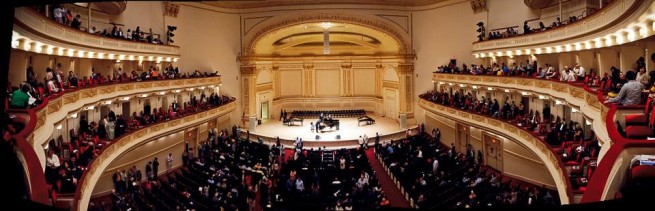
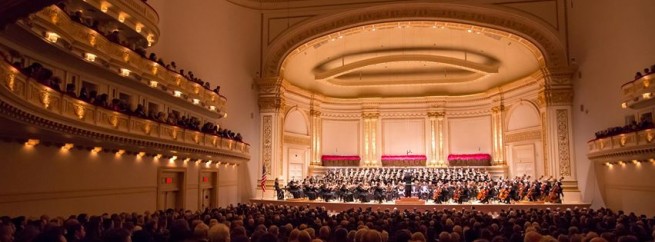
- Stern Auditorium / Perelman Stage – the famed hall where so many historic performances and world premieres have taken place. The auditorium features five levels, 2,804 seats, an elegant design and ideal acoustics.
- Zankel Hall – a 599-seat hall that presents chamber music, recitals, and contemporary music from classical, pop, jazz, and world music artists.
- Weill Recital Hall – an intimate 268-seat hall that offers recitals, chamber music concerts, panel discussions, and master classes.
Tickets
The Box Office is open Monday–Saturday, 11 AM–6 PM and Sunday, 12 PM–6 PM. On performance days, the box office remains open until 30 minutes after “curtain.” Tickets are also online, or via phone: 212-247-7800, daily, 8 AM–8 PM.
Ticket prices vary depending on performance, artist and seating location. However, in an effort to keep great music accessible to everyone, Carnegie Hall offers discount tickets to most performances. The discounts include up to 50% off the full price for seats with obstructed views in the main hall, and a limited numbers of same-day tickets for only $10! There are also $10 Student tickets are available to most performances, and 20% off tickets for Members of the Military or other membership schemes. See here for details about these discount ticket programs.
Museum and Archives
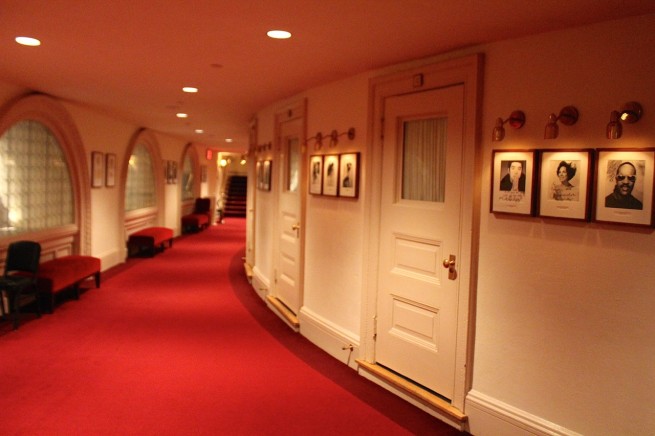
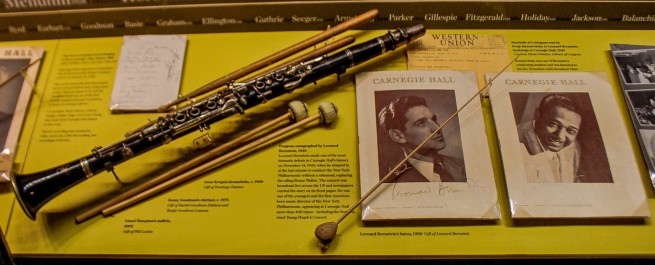
When attending a performance in the main auditorium, check the hallways lined with autographed photos of the luminaries who have performed at Carnegie Hall.
Also accessible to audiences in the main hall is the Rose Museum, which exhibits concert programs, photographs, autographed posters, musical manuscripts and video from it´s illustrious history. It is located on the second floor at 154 West 57th Street and entry is free!
During the concert season, it’s typically open Monday through Saturday, 11 AM – 4:30 PM, and may also open for concert patrons before events; it closes for part of the summer and resumes regular hours in the fall.
Food and Drink
Weill Café (formerly Citi Café) is located inside Carnegie Hall and open to the public for coffee, breakfast, lunch, and drinks — you do not need a concert ticket to use it. It offers pastries, espresso drinks, soups, salads, sandwiches, and other light fare. During performance events, refreshments are also available in and around the performance halls.
For dining before or after a performance, Carnegie Hall has put together a helpful Neighborhood Guide listing restaurants and parking facilities that are close to the venue.
Guided Tours
Carnegie Hall Tours offers guided public tours Monday through Saturday during most of the concert season, with times varying but often including late-morning and early-afternoon slots. Tickets typically cost around $25 for adults and about $23 for students and seniors (plus any online service fees). Tours depart from the lobby/box office area and are subject to the Hall’s rehearsal and performance schedule, so it’s best to check the official website for the latest dates and times before you go.
To keep up with current events, check their Blog and/or their YouTube Channel. Or follow them on Twitter and Facebook.
FAQ´s – Carnegie Hall
What is the best way to get to Carnegie Hall?
Carnegie Hall is located at 881 7th Avenue (at West 57th Street) in Midtown Manhattan. It is one block south of Central Park. Public transit is usually the fastest and most cost-effective option, especially before evening performances when traffic and congestion increase.
- NYC Subway lines: 59th Street–Columbus Circle (A, C, B, D, 1), about a 3–5 minute walk, 57th Street/Seventh Avenue (N, Q, R, W), about a 2–4 minute walk, 57th Street/Sixth Avenue (F), about a 6–8 minute walk
- Bus: M5, M7, M20, M31, M57, M104 — all stop within a block or two of the Hall. Bus routes along Broadway, Seventh Avenue, and 57th Street make it easy to reach the Hall.
- Taxi or Rideshare: Taxis and rideshare services (Uber, Lyft, Via, etc.) drop off passengers near the 57th Street entrance. Traffic in Midtown can be busy, so allow extra time during peak hours.
- On Foot: If you’re staying in Midtown or near Central Park, the Hall is within comfortable walking distance. It’s a pleasant stroll from hotels in Central Park South or Midtown East/West.
- By Bike: Cyclists can use nearby Citi Bike stations or bike racks in the area. Midtown bike lanes make it relatively easy, but Midtown traffic can be heavy, so ride with caution.
- By Car: Carnegie Hall is in a busy Manhattan neighborhood with limited parking. Street parking is restricted and hard to find. Nearby public garages exist, but prices can be high ($40–$60+ for an evening). Check the Carnegie Hall Neighborhood Guide for recommended options.
Is there a dress code and cloakroom?
There is no dress code. However, conservative semi-formal attire is most appropriate. Coat check is available. They are unable to accept large items or luggage.
Are there rules regarding photography?
Photography or recording of any kind is prohibited during performances. Use of cell phones or electronic devices is not allowed inside the auditoriums.
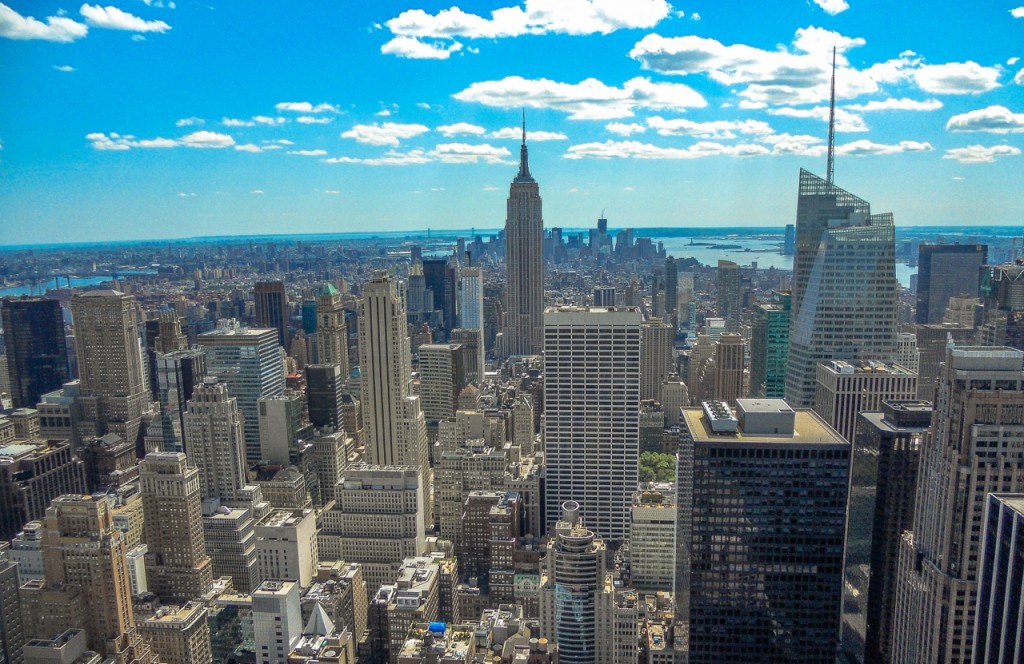
Ready to experience New York like a local? With expert guides showing you the best of the city’s sightseeing, history, and food? From iconic landmarks and hidden neighborhoods to delicious culinary stops and cultural gems, Take Walks’ New York tours offer something for every traveler.
Explore classic highlights like Central Park and the Met. Uncover rich stories on Historic Downtown tours. Satisfy your appetite with food-focused walks through the city’s most flavorful districts. Whether you’re a first-time visitor or a seasoned NYC fan, choose from 9 guided experiences that will help you see, taste, and feel New York in a whole new way.
Your perfect NYC adventure starts with a step — take it with Take Walks!